
Views: 0 Author: Site Editor Publish Time: 2025-10-09 Origin: Site


The electronics manufacturing industry is one of the most demanding sectors when it comes to precision, speed, and reliability. From printed circuit boards (PCBs) to advanced semiconductor devices, battery modules, and consumer electronics, manufacturers are under constant pressure to maintain high throughput while ensuring quality and safety. Any disruption in the testing and assembly processes can lead to delays, increased costs, or even defective products reaching end users.
Testing plays a critical role in the electronics production process. It ensures that every component meets stringent electrical, mechanical, and safety standards before it is shipped. However, traditional testing methods—especially those involving manual connections, threaded fittings, or time-consuming fixtures—often create bottlenecks in production. Connections may be slow, inconsistent, or prone to damage, leading to longer downtime, reduced productivity, and higher maintenance costs.
This is where Fast Test Connectors come into play. Designed to provide rapid, reliable, and repeatable connections, these specialized connectors streamline the testing process without compromising safety or accuracy. Their applications span across high-precision electronics testing, including electrical performance verification, pressure and vacuum testing, and sealing assessments. By incorporating Fast Test Connectors into production workflows, electronics manufacturers can achieve faster testing cycles, reduce equipment wear, and enhance overall operational efficiency.
Fast Test Connectors are advanced connection devices engineered to provide quick, safe, and non-destructive access to testing points and interfaces in electronic devices. Unlike traditional threaded connections or manual fittings, Fast Test Connectors are designed to deliver consistent performance with minimal effort, allowing operators to connect and disconnect test points multiple times without risk of damage.
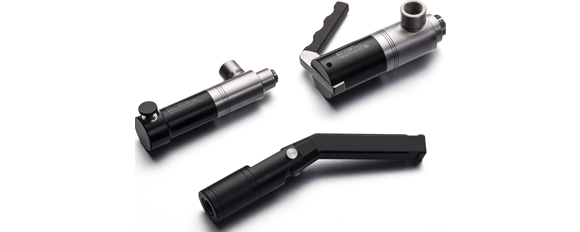
Fast Test Connectors come in various forms, each suited to specific production and testing requirements:
Lever-Type Connectors: Operated by a simple lever, these connectors lock securely into the test port while ensuring a tight seal. The lever mechanism allows for rapid engagement and disengagement, ideal for high-volume testing lines.
Thumb-Valve Connectors: Featuring a manual push-button or thumb valve, these connectors allow precise control over fluid or gas flow during testing. They are commonly used for sensitive or smaller-scale electronics components where precise pressure control is essential.
Pneumatic (Air-Actuated) Connectors: These connectors operate using pneumatic pressure to engage or release the connection. They are suitable for automated testing systems, where speed and repeatability are critical, and are often integrated into robotic or assembly line setups.
The core mechanism of Fast Test Connectors revolves around two key features: a clamp or chuck lock that secures the connection to the interface and a high-pressure or vacuum seal that ensures leakage-free operation. When properly engaged, the connector forms a reliable interface between the test system and the device under test (DUT), allowing accurate measurements without compromising the integrity of sensitive electronics.
Electronics manufacturing presents several challenges that can impact testing efficiency and product quality:
Precision Requirements: Modern electronics often feature highly sensitive components, including microchips, fine-pitch connectors, and fluid-cooling interfaces. Any misalignment or damage during testing can compromise performance or cause permanent defects.
Time-Consuming Manual Connections: Traditional threaded fittings or screw-in connectors require careful alignment, repeated tightening, and verification. For high-volume production lines, this method is slow and prone to human error, leading to inefficiencies and increased cycle time.
Damage Risks: Repeated manual connections can cause wear on threads, seals, or interface ports. Damaged connectors may lead to leaks, inaccurate test results, or costly repairs.
Consistency Across Batches: In large-scale production, achieving uniform testing conditions is essential. Variability in manual connections or human operation can lead to inconsistent results, making quality control more difficult.
By addressing these challenges, Fast Test Connectors offer a solution that balances speed, reliability, and non-destructive operation, ensuring efficient testing without compromising component integrity.
Fast Test Connectors are versatile tools that improve efficiency across multiple areas of electronics manufacturing:
PCBs are the foundation of virtually all electronic devices. During production, each board must undergo electrical testing to verify circuit continuity, signal integrity, and component placement. Fast Test Connectors allow operators to quickly interface testing probes or automated testing equipment with multiple PCB test points. By reducing the time required to engage and disengage test connections, manufacturers can increase throughput while ensuring accurate results.
Semiconductors often require testing under vacuum, controlled pressure, or thermal cycling conditions. Fast Test Connectors can provide secure, leakage-free connections to these test systems, ensuring that devices are evaluated accurately without exposure to contaminants or environmental variability. Their non-destructive nature preserves delicate contact points and internal structures.
Battery modules and energy storage systems require rigorous pressure, sealing, and electrical tests. Fast Test Connectors enable safe, high-pressure connections for fluid-cooling circuits, gas venting tests, or electrical conductivity verification. This capability ensures that battery packs are compliant with safety standards and perform reliably in real-world applications.
Consumer devices often include cooling systems, fluid channels, and miniature connectors that need testing for air-tightness, leakage, or pressure tolerance. Fast Test Connectors simplify these operations by providing instant, high-integrity connections. For automated assembly lines, they allow robotic test systems to engage and disengage multiple devices quickly, reducing overall production time.
Integrating Fast Test Connectors into electronics production workflows provides numerous benefits:
The rapid engagement mechanism of these connectors significantly reduces the time needed to connect and disconnect devices during testing. This faster cycle time translates to higher production throughput and shorter lead times.
By ensuring tight, leak-free seals, Fast Test Connectors maintain consistent test conditions. This improves measurement accuracy for pressure, vacuum, or electrical tests, minimizing false readings and quality control issues.
Fast Test Connectors prevent damage to threads, seals, and delicate test points. This non-destructive connection method preserves component integrity and reduces the need for frequent replacement or repair of test interfaces.
The ease of use and ergonomic operation—lever, thumb valve, or pneumatic actuation—reduces operator fatigue and simplifies the workflow. Minimal training is required, enabling workers to focus on core production tasks rather than complex manual connection procedures.
Many Fast Test Connectors are designed for integration with automated testing platforms. This allows seamless operation in robotic assembly lines or high-volume testing environments, supporting consistent and scalable production.
Fast Test Connectors contribute to operational efficiency across several dimensions:
Reduced Test Cycle Time: Quick connection and disconnection reduce downtime, enabling more devices to be tested within the same timeframe.
Minimized Rework and Scrap Rates: Consistent, non-damaging connections decrease the likelihood of defective devices caused by poor test interface engagement.
Extended Equipment Life: By avoiding repetitive mechanical wear, Fast Test Connectors prolong the lifespan of test fixtures, probes, and interface ports.
Support for Smart Manufacturing: Their compatibility with automated test platforms supports Industry 4.0 practices, including real-time data collection, predictive maintenance, and workflow optimization.
Overall, these factors lead to improved yield, reduced costs, and higher customer satisfaction.
Selecting the appropriate Fast Test Connector is essential to maximize benefits:
Application-Specific Selection: Determine whether the test requires high-pressure, vacuum, or microfluidic connections. Different connectors are optimized for specific pressure ranges and environmental conditions.
Interface Compatibility: Ensure the connector matches the device’s interface type—internal or external threads, custom fittings, or standardized ports.
Maintenance Considerations: Easy replacement of seals and modular components simplifies maintenance and reduces downtime during production interruptions.
Automation Readiness: For high-volume electronics manufacturing, prioritize connectors compatible with robotic or automated test systems.
Fast Test Connectors have become indispensable tools in modern electronics manufacturing, delivering speed, precision, and safety that traditional testing methods cannot match. By enabling rapid, non-destructive connections across PCBs, semiconductors, battery modules, and consumer electronics, these connectors significantly enhance production efficiency and test reliability. Their compatibility with automation further positions them as essential components in high-volume, Industry 4.0-ready production lines.
For manufacturers looking to streamline electronics testing, reduce cycle time, and protect sensitive components, partnering with Ningbo Langch International Trade Co., Ltd. provides access to high-quality, reliable Fast Test Connector solutions. Leveraging their expertise and premium connectors ensures optimized workflows, cost savings, and improved production outcomes while supporting the rigorous demands of the electronics industry.

